
- You are here:
- Home »
- Permaculture & Homesteading »
- Permaculture: My Journey Toward a Sustainable Future
Permaculture: My Journey Toward a Sustainable Future
Introduction: A New Way to See the Land
My name is Manuela, and I’m a student at an agricultural vocational school.
I have always loved nature, but I never imagined that agriculture could be something more than just growing food—it could be a way to regenerate the land, protect biodiversity, and build resilient communities.
Then, I discovered permaculture.
At first, it sounded complex, even overwhelming.
But the more I learned, the more I felt a deep connection to it.
Permaculture is not just a method of farming; it’s a philosophy, a way of life. It’s about working with nature rather than trying to control it.
And the best part? Anyone can do it—whether you have a farm, a small garden, or even just a balcony.
This is my journey into permaculture, a world that has opened my eyes and made me dream of a more sustainable, abundant future.
What is Permaculture?
Permaculture is a design system that mimics nature to create self-sustaining ecosystems.
Instead of using chemical fertilizers, pesticides, and industrial farming techniques that deplete the soil, permaculture regenerates it.
Bill Mollison, one of its founders, described permaculture as “a philosophy of working with, rather than against nature”.
The goal is simple: to create food systems that give back more than they take.
But permaculture isn’t just about plants. It’s about:
- Building healthy soil
- Managing water wisely
- Growing diverse crops together (polyculture) instead of monocultures
- Supporting biodiversity and attracting beneficial insects
- Designing landscapes that are efficient and self-sustaining
As a student, I started wondering: Why aren’t we all farming this way?
The Problem with Industrial Agriculture
In school, I learned how conventional farming feeds billions of people, but at a great cost:
Soil Erosion & Depletion
Heavy tilling and chemical use are destroying the Earth’s ability to grow food.
Water Waste & Scarcity
Industrial farms overuse and pollute water sources.
Biodiversity Loss
Monocultures wipe out native plants, insects, and wildlife.
Human Health Risks
Pesticides and processed foods contribute to diseases like diabetes and obesity.
Seeing this made me feel frustrated.
Why do we keep using destructive methods when there are better alternatives?
That’s where permaculture comes in.
Falling in Love with Permaculture: My First Steps
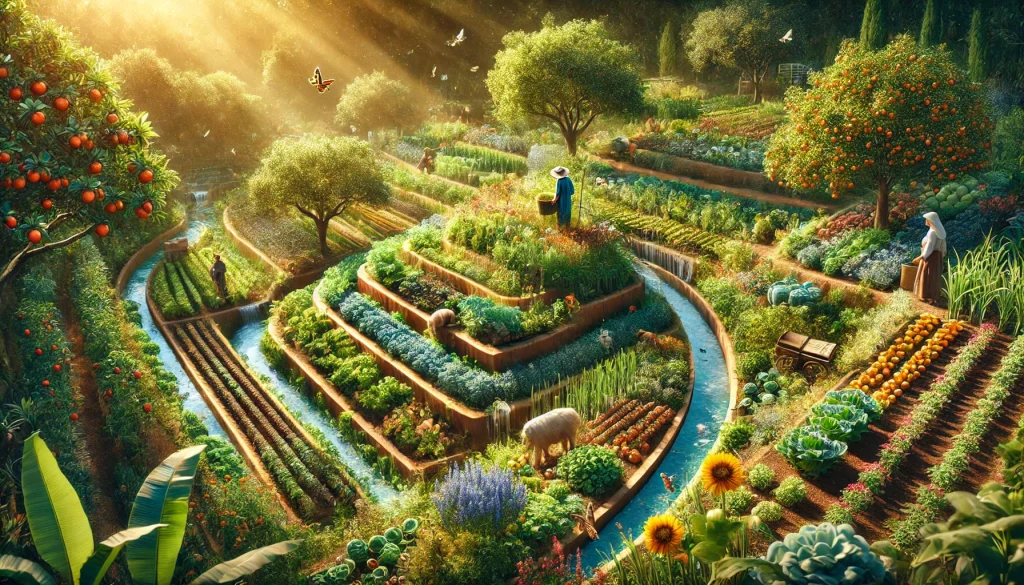
I remember the first time I saw a permaculture garden—it was like stepping into a living, breathing ecosystem.
Unlike the neat, straight rows of conventional farms, this garden was wild yet organized, full of life, buzzing with bees and butterflies.
I learned about food forests, where fruit trees, vegetables, and herbs grow together in harmony, just like in a natural forest.
I discovered swales, trenches that capture rainwater and prevent soil erosion.
And most of all, I realized that this was the future of farming.
So, I decided to try it myself.
I started small:
- Planting companion crops—basil next to tomatoes, beans with corn.
- Using mulch to protect and enrich the soil.
- Setting up a worm composting bin to create natural fertilizer.
And the results?
Healthier soil, fewer pests, and stronger plants.
It felt amazing to see nature responding with abundance.
What Makes Permaculture So Powerful?
It Creates Self-Sustaining Systems
Permaculture designs landscapes that work without constant human intervention.
A well-designed permaculture farm can:
- Regenerate its own soil
- Maintain water cycles naturally
- Support a balanced ecosystem of plants, animals, and insects
It Respects Nature Instead of Fighting It
Instead of killing “pests” with chemicals, permaculture attracts beneficial insects that control them naturally.
Instead of forcing crops to grow in poor soil, permaculture builds healthy soil so plants thrive on their own.
It’s a Solution to Climate Change
Did you know that healthy soil stores carbon?
By regenerating the land, permaculture can reverse environmental damage and create a cooler, more resilient planet.
My Future in Permaculture
As I continue my studies, I dream of starting my own permaculture farm—a place where food grows in harmony with nature.
I want to teach others, especially young people, that we don’t have to follow the destructive patterns of industrial farming.
We can do better.
I believe that permaculture is the future.
And I’m excited to be part of it.
A Call to Action
If you’ve ever felt powerless about climate change or frustrated by the state of our food system, I invite you to explore permaculture.
Start small.
Observe nature.
Try growing a few plants together. Build healthy soil.
Every action counts.
Permaculture has given me hope, purpose, and a deep connection to the land.
And I know it can do the same for you.
Let’s grow a better world—together.
About the Author Manuela Portiglia
Manuela is a passionate agriculture student, specializing in sustainable farming and permaculture design. Growing up with a deep love for nature, she discovered permaculture as a way to regenerate the land, protect biodiversity, and grow food in harmony with the environment. Her journey into permaculture started as part of her studies, but it quickly became a personal mission. Through hands-on experimentation in gardens and farms, she has embraced eco-friendly agriculture that nurtures both people and the planet.